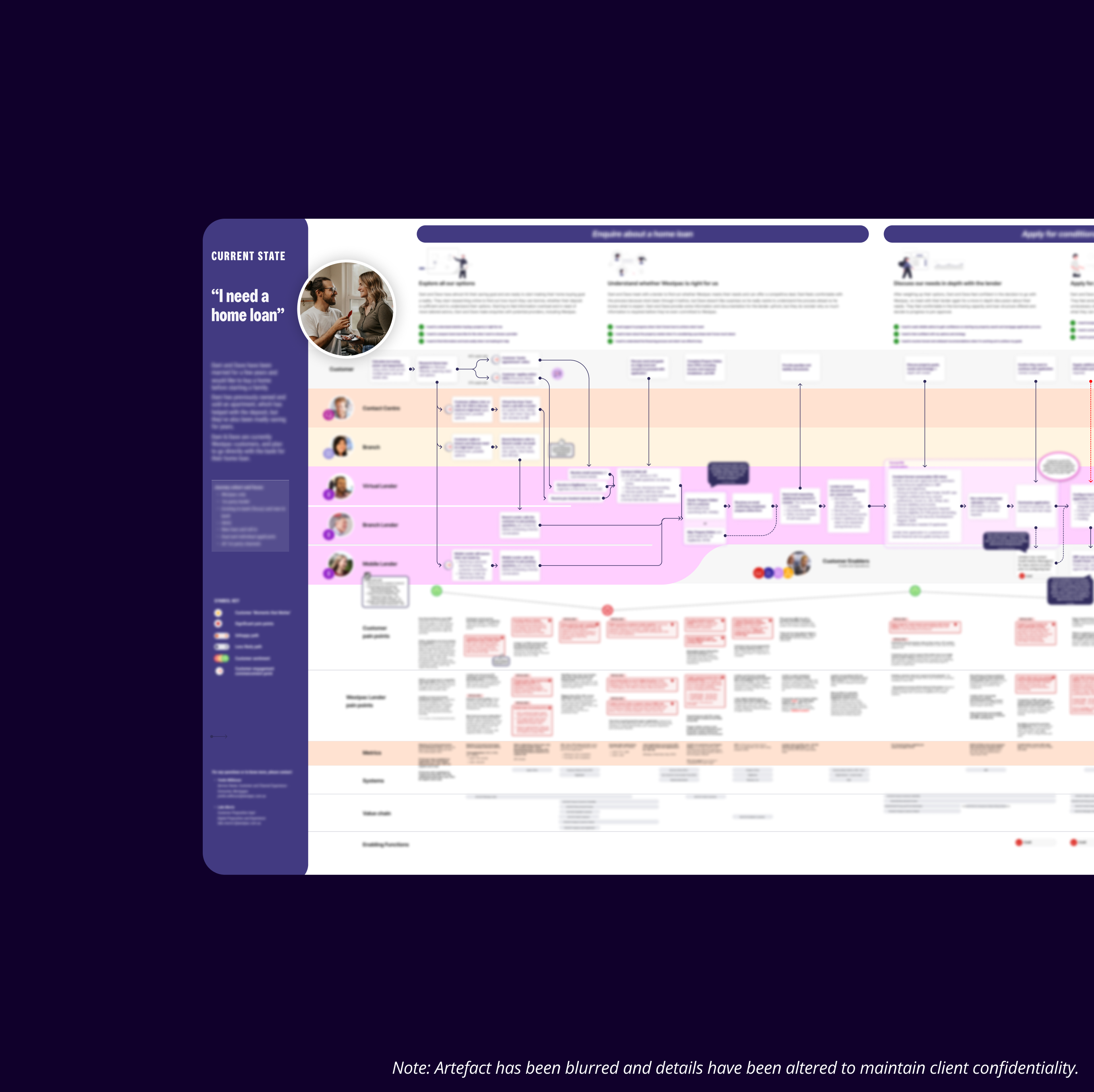
When an Australian bank embarked on a major digital transformation affecting every customer, we recognised the critical need to protect its most vulnerable - family and domestic abuse survivors, people experiencing financial hardship, and culturally and linguistically diverse communities, to name a few. Over 3 months, I led the design team in developing a Vulnerable Customer Support Model, mapping 20+ vulnerability categories against 7 priority customer needs and delivering evidence-based mitigation strategies that enabled the bank to proceed with care.
Major Australian Bank
(Client name withheld due to NDA)
Design Lead and Inclusive Design & Accessibility SME
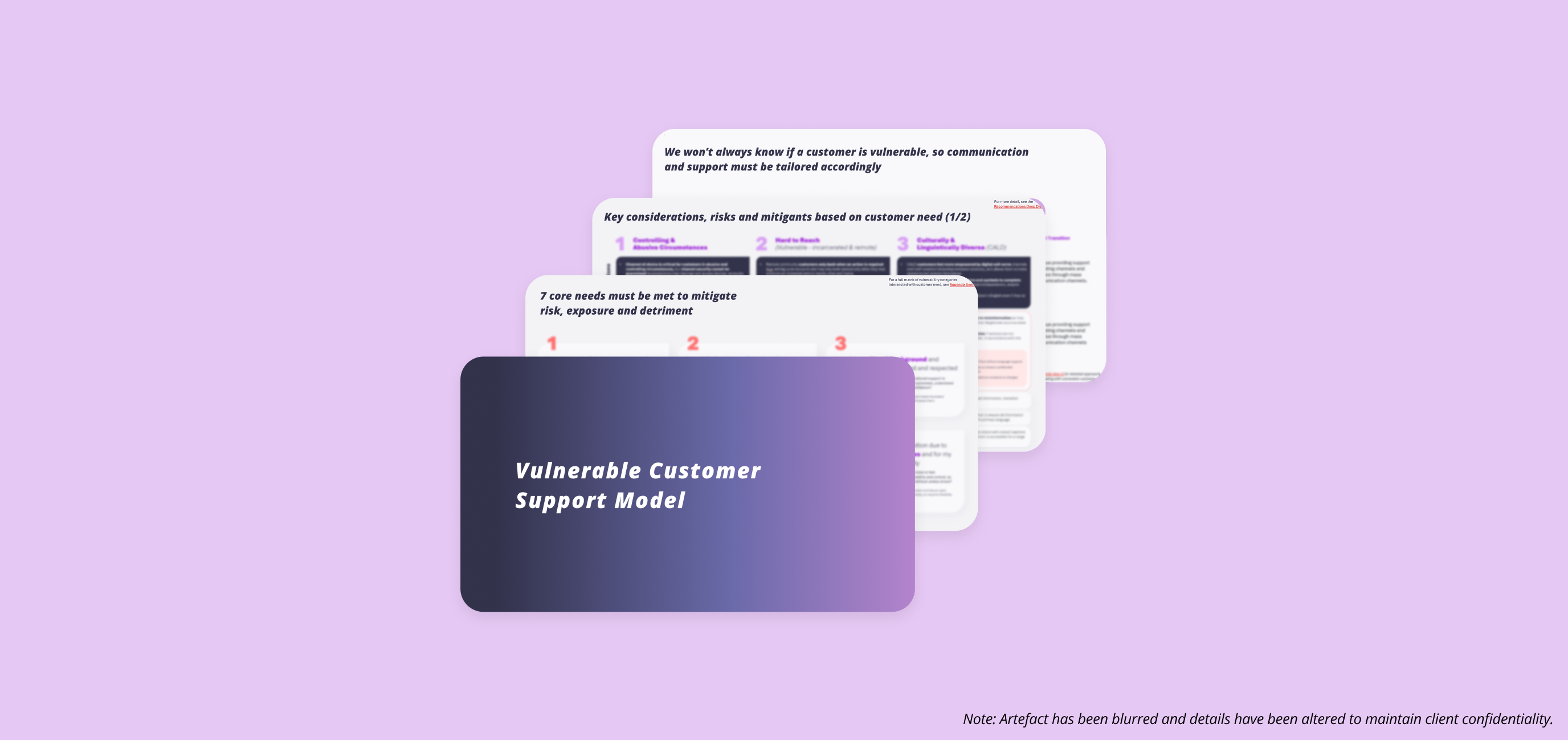
Our client was embarking on a major digital transformation that would impact every customer nationwide. While this transformation would benefit customers and the business alike, it posed significant risk to the bank's most vulnerable, such as family and domestic abuse survivors, hard-to-reach customers, and culturally and linguistically diverse communities.
Recognising this, my team identified an opportunity to investigate the considerations and mitigation strategies required to support these customers, and develop a Support Model that would enable the business to proceed with care.
We took a needs-based approach, creating a matrix of 20+ vulnerability categories intersected with customer need. This allowed us to focus on specific use cases without building bespoke solutions for every vulnerability type - and better reflected the intersectional reality of people's lives. For example: "I need a way to transition while being protected from a controlling or abusive person." This single need spans domestic and family abuse survivors, elder abuse, and modern slavery.
Over 3 months, we conducted extensive stakeholder research, consulting with 30+ vulnerability and accessibility SMEs across the business to surface the specific needs and considerations for these customers.
We then developed a Support Model defining 7 priority customer needs and the mitigation strategies required for a safe and effective transformation - ensuring vulnerable customers remain protected and maintain control over their experience.
Our team was embedded with the executive team from Day 1, ensuring the needs of vulnerable customers were considered from the outset. For many executives, this was their first exposure to these customer circumstances - and the real power of the project lay in surfacing these needs in a forum that could drive top-down change.
The most critical risk we identified: customers in abusive situations who hold 'secret' accounts their perpetrators don't know about. Failing to consider this scenario would have devastating consequences for those individuals - and significant reputational and regulatory risk for the bank.
Through this engagement, we stood up dedicated teams focused solely on protecting these customers, and secured funding for a vulnerability identification POC that will enable the bank to proactively support customers showing signs of financial stress, abuse and other risk factors.